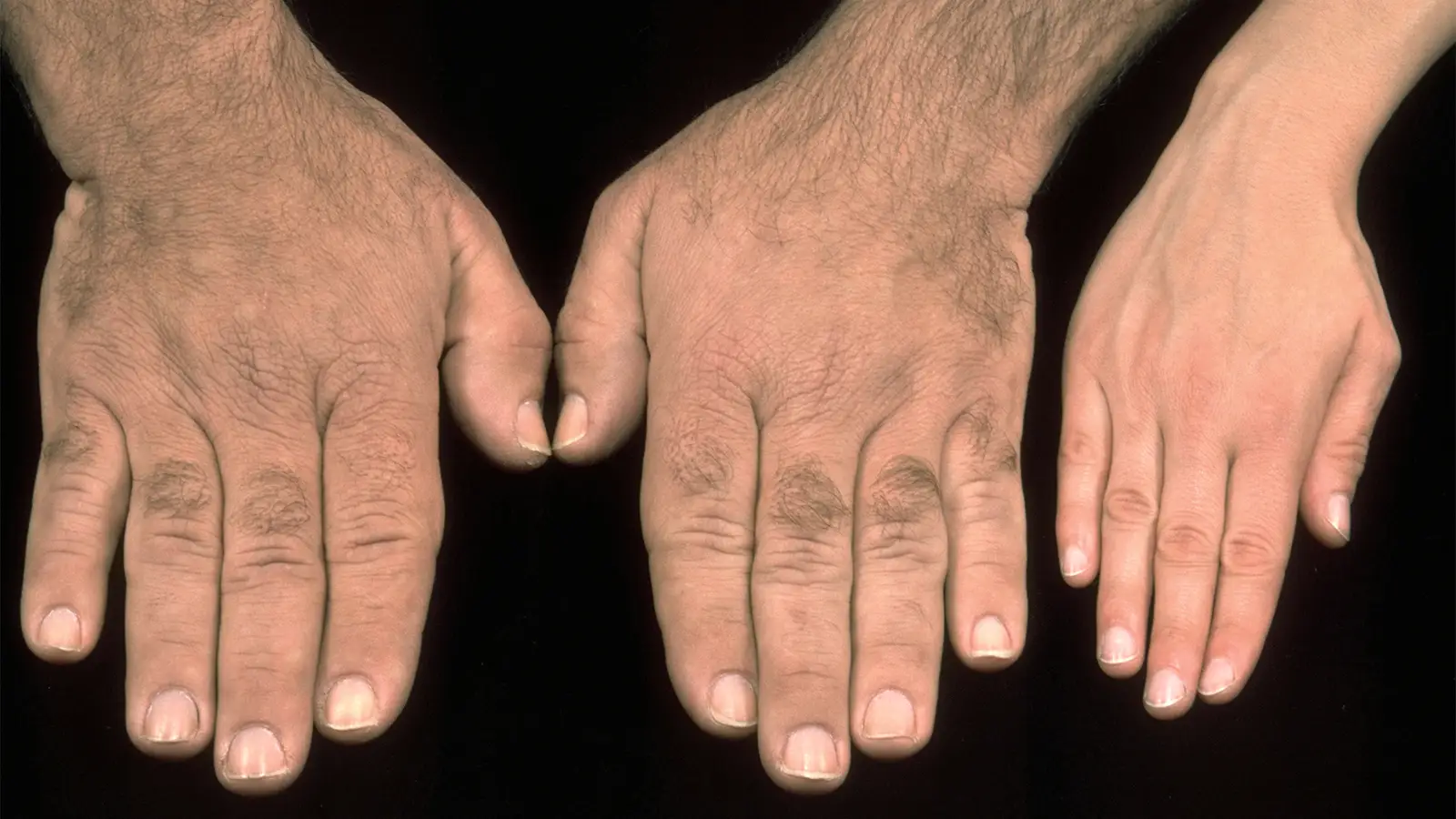

Central precocious puberty (CPP)
Definition – Precocious puberty is defined as the onset of pubertal development more than 2 to 2.5 standard deviations (SD) earlier than the average age.
Threshold for evaluation – Because of the trend of earlier pubertal development, there is controversy about the lower age limit for normal pubertal development. Nonetheless, we recommend evaluation in children presenting with secondary sexual development younger than eight years in females or nine years in males. Decisions regarding the evaluation of a child with precocious puberty should incorporate all available clinical information; earlier pubertal development should not be simply attributed to a young person’s weight status or racial/ethnic background.
Classification – The etiology of precocious puberty is classified by the underlying pathogenesis into three categories:
- Central precocious puberty (CPP) is caused by an early activation of the hypothalamic-pituitary-gonadal axis. CPP is idiopathic in 80 to 90 percent of females and 25 to 80 percent of males; the remainder have pathologic causes (eg, brain tumor).
- Peripheral precocity is caused by gonadotropin hormone-independent secretion of sex hormones from the gonads, abnormal production of sex hormones by the adrenal glands, ectopic human chorionic gonadotropin (hCG) production by a germ-cell tumor, or exogenous sources of sex steroids.
- Benign pubertal variants include isolated breast development (premature thelarche), isolated pubic hair development (premature pubarche/adrenarche), benign prepubertal vaginal bleeding, and nonprogressive precocious puberty. These patterns are usually a variant of normal puberty; patients should be followed clinically for signs of progression.
Initial evaluation – The first step is a focused history and physical examination with pubertal staging. If this evaluation confirms advanced or progressive development of secondary sexual characteristics, perform a radiographic assessment of bone age. Advanced bone age suggests precocious puberty rather than a benign pubertal variant but is not definitive.
Laboratory testing – For children with advanced or progressive development of secondary sexual characteristics on examination, the next step is to measure basal (unstimulated) luteinizing hormone (LH), follicle-stimulating hormone (FSH), and estradiol and/or testosterone concentrations. Results can differentiate between CPP and peripheral precocity, which then guide additional testing.
- Elevated LH (greater than or equal to 0.2 to 0.3 mIU/mL, depending on the assay) suggests CPP. By contrast, LH concentrations in the prepubertal range (ie, <0.2 mIU/mL) are consistent with either peripheral precocity or a benign pubertal variant.
- FSH has limited diagnostic utility in identifying children with CPP but is typically suppressed in children with peripheral precocity. The utility of estradiol and testosterone concentrations in diagnosing CPP is dependent on the measurement method used.
Further evaluation for selected patients
Gonadotropin-releasing hormone (GnRH) stimulation test – If the clinical picture is discordant with the initial baseline investigations (ie, ongoing pubertal progression with a prepubertal basal LH level <0.2 mIU/mL), a GnRH stimulation test can be performed to help distinguish CPP from a benign pubertal variant. Children with CPP have a pubertal (heightened) LH response to GnRH stimulation.
Imaging – Recommendations for imaging depend on the type of precocious puberty:
CPP – All males with CPP should have brain MRI because of the high prevalence of central nervous system (CNS) lesions in this group. Brain MRI should also be performed in all females with onset of CPP before six years of age; there is ongoing controversy about the need for routine imaging of females with CPP onset between six and eight years of age.
Peripheral precocity – Males with peripheral precocity may warrant an ultrasound examination of the testes to evaluate for the possibility of a Leydig cell tumor. Females with peripheral precocity may warrant a pelvic ultrasound performed to help identify the presence of an ovarian cyst or tumor.
In females and males, peripheral precocity and progressive virilization and/or markedly elevated serum adrenal androgens (eg, dehydroepiandrosterone sulfate [DHEAS]) occasionally is caused by an adrenal tumor. If other diagnoses such as congenital adrenal hyperplasia and exogenous androgen or testosterone exposure have been excluded, such patients should have an ultrasound or CT of the adrenal glands.
Decision to treat – The primary goal of treatment for CPP is to allow a child to grow to a normal adult height; relieving psychosocial distress, if present, is an additional goal. For patients with CPP, the decision about whether to treat largely depends on the age of onset of CPP, the rate of sexual maturation, and the estimated adult height as determined by the rate of bone age advancement. In general, treatment is most likely to be beneficial for children who are younger, have rapid pubertal progression, and shorter predicted adult height. Children with slowly progressive forms of CPP do not require treatment, because they reach their height potential without treatment.
- Gonadotropin-releasing hormone (GnRH) agonist therapy – If treatment for CPP is indicated, GnRH agonists are used. Clinically significant increments in height potential are achieved with a variety of GnRH agonists, and outcome data are insufficient to recommend one form over another. The choice of GnRH agonist formulation depends on patient and clinician preference and local insurance and regulatory approvals; in Iran practice, we use either the one-month preparation of Leupromer (leuprolide depot) or one-month and three-month preparation of Variopeptyl (triptorelin depot).
- Monitoring – During treatment with a GnRH agonist, patients should be monitored periodically for pubertal development, height velocity, and bone age to determine whether the dose and interval are adequate.